From BDR to Workflow Designer: How Shared AI Skills Turn Sales Busywork Into a BD Operating System
An August 13, 2026 Anthropic webinar for business-development representatives demonstrated something more important than another AI feature.
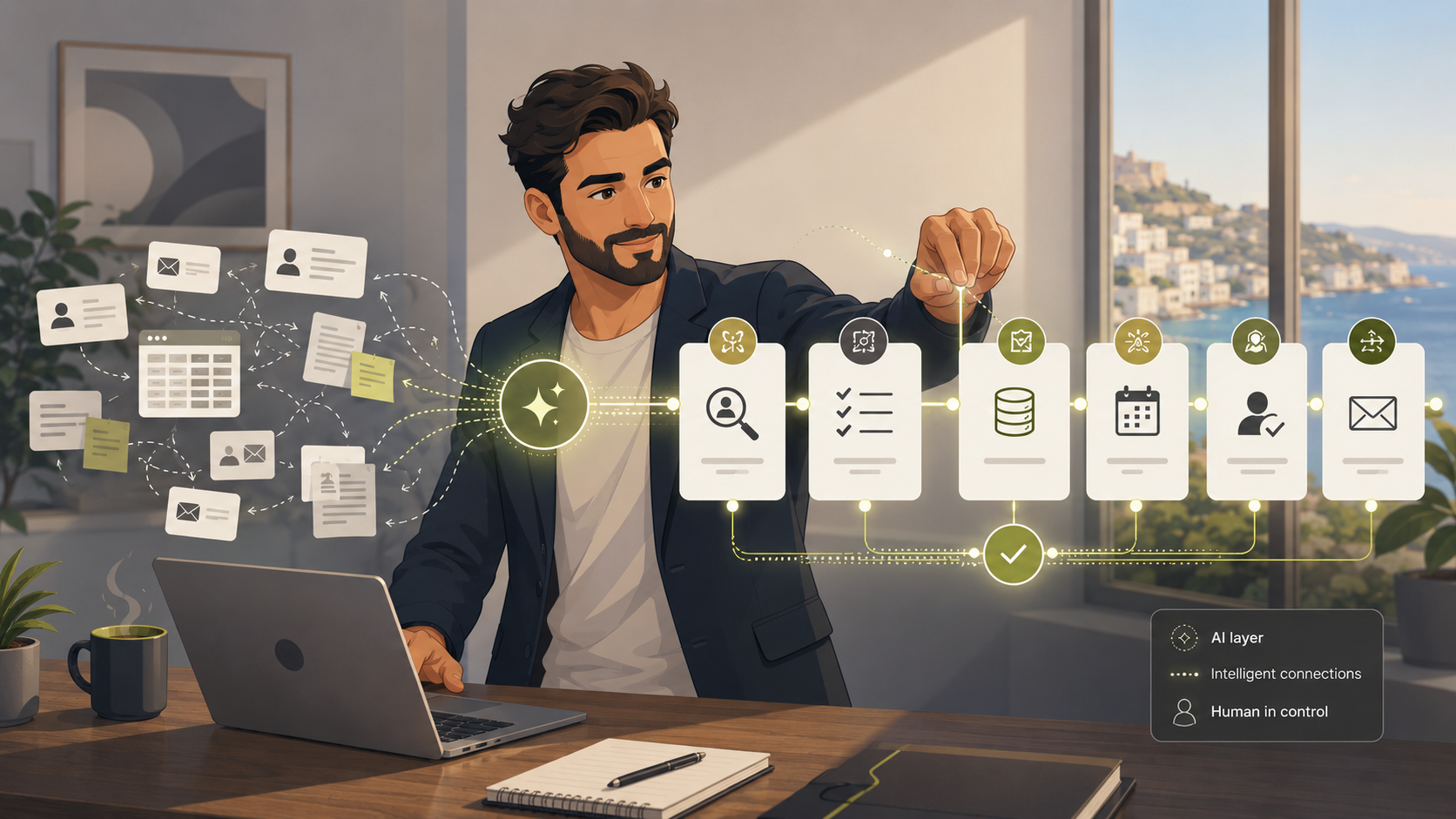
During the session, Anthropic’s team showed how repeatable sales work – including follow-up preparation, account research, pipeline reviews and lead triage – could be converted into reusable AI-assisted workflows. Those workflows could be scheduled, improved and shared with a wider team.
The important idea was not that AI could draft another email.
It was that knowledge previously held by one experienced representative could become a repeatable operating capability available to the entire team.
That changes the question from ‘How can we prompt AI better?’ to ‘How should we redesign the way business development gets done?’
Source: Claude for Business Development Representatives – August 13, 2026
What Is a BD Operating System?
A BD operating system is a documented set of commercial workflows, decision rules, information sources, approval gates and performance measures that a team follows consistently.
It is not simply a CRM, chatbot or collection of prompts.
When AI is added responsibly, parts of that operating system can become reusable skills: structured instructions that gather information, propose next steps, prepare outputs and check whether required rules have been followed.
A plugin or productized platform can then package several related skills with the necessary tools and data connections.
Anthropic describes plugins as packages containing skills, connectors and sub-agents. OpenAI similarly positions skills as reusable workflows that can be packaged and distributed through plugins. The terminology differs, but the direction is similar: AI is moving from isolated conversations towards reusable organizational capabilities. (Anthropic, OpenAI)
The Shift Is Bigger Than Faster Content Creation
Sales teams have used AI for prospect research, lead scoring, email drafting and forecasting for several years. The emerging difference is that AI systems can increasingly work across multiple steps and business tools.
Salesforce published its 2026 State of Sales findings on February 3, 2026, based on a survey of 4,050 sales professionals conducted during August and September 2025. Fifty-four per cent reported having used agents. Sellers expected agents to reduce prospect-research time by 34% and drafting time by 36%.
The same research identified an important constraint: 51% of sales leaders using AI said disconnected systems were slowing their initiatives, while 74% of sales professionals were focusing on data cleansing.
AI does not remove the need for clean information and disciplined processes. It makes those foundations more important. (Salesforce)
Microsoft’s May 2026 Work Trend Index identified a related pattern. Its most advanced AI users routinely redesigned workflows, used agents for multi-step work and participated in shared AI practices across their organizations. Respondents also placed greater importance on quality control, critical thinking and responsibility for final outputs. (Microsoft)
The practical conclusion is straightforward: the value does not come from giving AI more tasks. It comes from designing a better system around the work.
The BDR Role Is Being Redesigned – Not Simply Removed
It would be careless to claim that AI will have no effect on sales roles or staffing. Automation will change how some work is distributed, and every organization will make different decisions.
However, the simple ‘AI versus BDR’ debate overlooks a more useful near-term shift.
As AI handles more repetitive preparation and administration, business-development professionals can take on five higher-value responsibilities:
- Identify workflows worth improving.
- Explain the context, rules and exceptions behind the work.
- Define where human judgment and approval remain necessary.
- Evaluate outputs and improve the system when it fails.
- Spend more time understanding prospects, running discovery and building relationships.
The representative is no longer only executing a process. They are helping design, supervise and improve it.
This matters because the best workflow knowledge frequently sits with the people doing the work every day. They understand why one lead needs immediate attention, why a particular follow-up would be inappropriate and which missing CRM field represents a genuine deal risk.
A useful AI system needs that judgment to be made explicit.
From Individual Good Practice to Shared Infrastructure
One effective representative may already have a reliable method for preparing meetings, checking opportunities or following up with inbound leads.
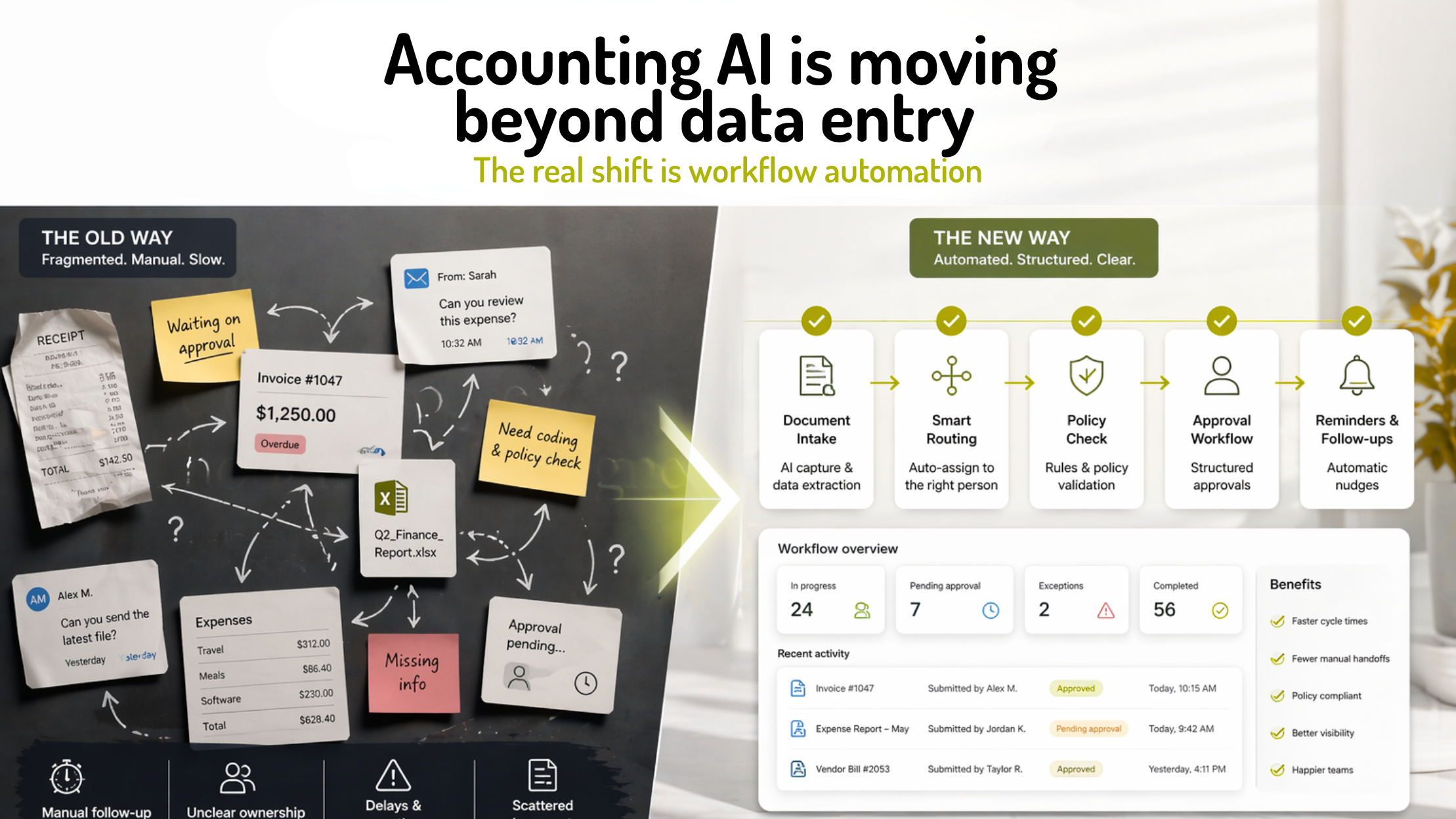
But if that method lives only in their head – or inside a private collection of prompts – the organization remains dependent on that person.
Turning the method into a shared skill requires documenting:
- The trigger that starts the workflow.
- The information it needs.
- The systems it may access.
- The rules and exceptions it should apply.
- The output it must produce.
- The decisions that require approval.
- The measure used to judge whether it worked.
Once these elements are clear, the workflow can be tested consistently. If it performs reliably, it can later be scheduled, connected to other systems or included in a shared platform.
This is productization at an operational level: converting useful knowledge into a repeatable, governed capability.
Inside LLD Business Brain: Turning Commercial Rules into Shared Workflows
The LLD Business Brain initiative reflects this direction.
Its purpose is not simply to generate updates. It is structured around commercial rules: an active opportunity needs a next step, date, owner and risk note. Proposal development includes feasibility and approval gates. Proof and delivery considerations must remain visible throughout the process.
An AI-assisted version of this workflow could gather updates, identify missing information, propose actions and prepare approval material.
It should not independently decide pricing, make unsupported commitments or replace the people responsible for commercial and delivery judgment.
LLD’s work on productization platforms follows the same principle. Reusable workflows, business rules and delivery knowledge should become structured capabilities rather than remain scattered across conversations and individual files.
These are internal operating examples—not client case studies or claims of measured client results.
Identify Your First AI Use Case
A business does not need to automate its entire sales process to begin learning.
Start with one workflow and apply this six-point test:
- Frequency: Does it happen weekly or more often?
- Consistency: Can the normal steps and important exceptions be explained?
- Data readiness: Are the required inputs accessible and reasonably clean?
- Reviewability: Can a person quickly verify whether the output is correct?
- Reversibility: Can mistakes be corrected before causing significant commercial or reputational harm?
- Measurement: Can the business track time, completeness, response speed, conversion or another relevant outcome?
A workflow meeting five or six conditions is a reasonable candidate for a controlled pilot.
A workflow meeting three or four probably requires process or data improvement first.
A workflow meeting fewer than three should not be automated yet.
Move Through Automation in Stages
The safest starting point is rarely immediate autonomy.
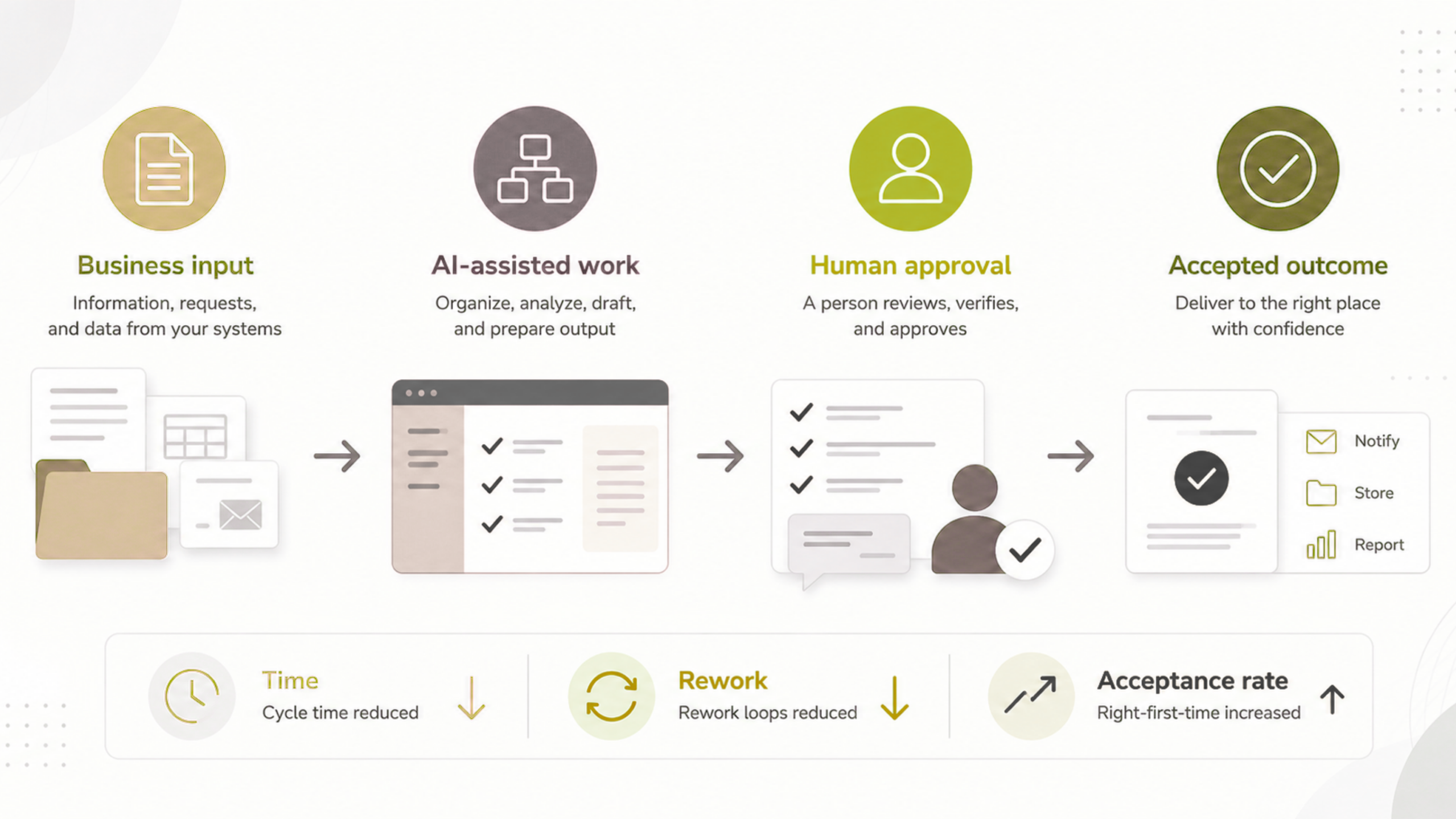
- Assist: AI gathers information, summarizes context or prepares a first draft. A person completes the work.
- Propose: AI recommends actions, highlights missing information or prepares structured changes. A person reviews each proposal.
- Approve: The workflow becomes repeatable, but defined decisions still require explicit human approval.
- Automate: Only stable, measurable and low-risk actions run without individual review. Exceptions are escalated to the appropriate person.
This progression gives the team evidence before it increases autonomy. It also reveals whether the real problem is the tool, the data or the underlying process.
Where Businesses Commonly Go Wrong
- Buying a broad AI platform before selecting a specific workflow and business outcome.
- Automating an inconsistent process. AI can perform disorder faster, but that does not make the result useful.
- Starting with high-risk customer communication. Internal preparation, data-completeness checks and next-step recommendations usually provide safer learning environments.
- Measuring only time saved. A faster workflow that damages data quality, customer trust or delivery feasibility is not an improvement.
- Treating implementation as a technology project alone. Commercial owners, frontline users and delivery stakeholders must help define the rules.
A Local Opportunity Worth Testing
LLD has not yet validated how widely Lebanese organizations are adopting AI-driven BD operating systems. That uncertainty makes focused market discovery more useful than broad adoption claims.
Education organizations might examine admissions follow-up, enquiry routing or application-status workflows. Manufacturers might examine quotation follow-up, distributor communication or handoffs between commercial and operational teams.
These are illustrative possibilities – not verified LLD client implementations.
The objective should not be to force AI into every process. It should be to find one controlled workflow that could improve consistency, responsiveness or visibility, and then validate that opportunity with real users and operational data.
Organizations that learn how to convert practical knowledge into governed workflows will be better positioned than those that merely collect more AI tools.
See Where AI Fits Your Business
Start by identifying one repetitive workflow, the decisions it contains and the outcome that would make improving it worthwhile.
See Where AI Fits Your Business
AUTHOR
Business Development Manager at LeLaboDigital, focused on connecting client challenges with practical digital solutions across web, automation, AI, SEO, and growth strategy.