
Digitizing the Aley Fun Run: From Paper Registration to a Connected Event Platform
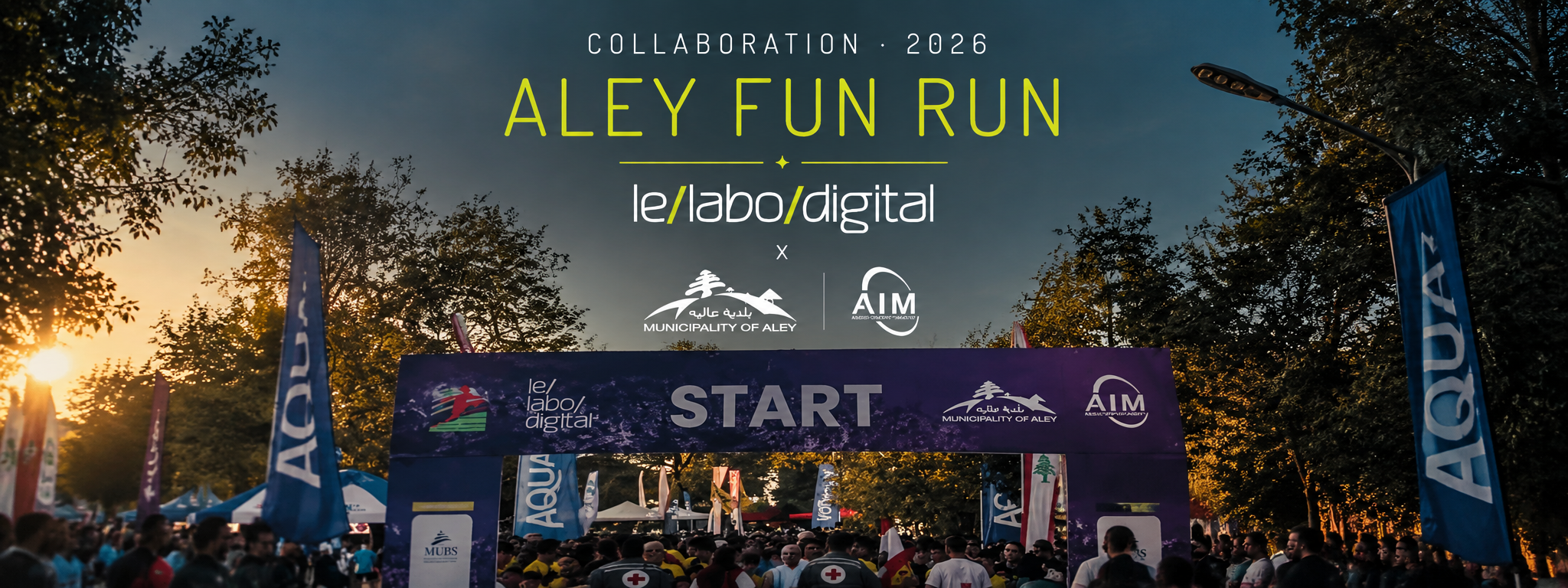
For the 2026 Aley Fun Run, the Municipality of Aley and AIM Academy moved participant registration online for the first time.
As Platinum Sponsor and Technology Partner, LeLaboDigital designed, developed and operated the digital platform supporting the event, from participant registration and race information to organizer tools and participant support.
The goal was not simply to replace paper with an online form. The platform needed to work for a broad community audience, accommodate different ways of registering, adapt as event details changed, and give organizers the tools to manage the process themselves.
At a Glance
| Client | Municipality of Aley and AIM |
| Event | Aley Fun Run 2026 — free 5 km community run |
| Date | Sunday, 20 September 2026 |
| Location | Ras El Jabal, Aley |
| Our role | Platinum Sponsor & Technology Partner |
| Registration Period | 10–20 September 2026 |
| What we built | Event website, mobile-first registration, email verification, AI race assistant, organizer dashboard, race-desk tools and bulk registration |
| Registrations | 1,000+ |
Key Numbers

The Challenge
Moving the Aley Fun Run online introduced challenges beyond simply digitizing the registration form.
Designing for a Broad Community
The event attracted parents with young children, teenagers, walkers and residents with different levels of digital familiarity.
Most participants would register using their phones. Some would register on behalf of family members, while others would still prefer to contact the organizers directly.
The digital experience therefore had to be simple without making online registration the only option.
A Ten-Day Registration Window
Registration opened on 10 September, just ten days before race day.
The platform needed to be ready to handle registrations immediately and continue operating reliably as demand increased closer to the event.
Event Details Were Still Changing
Some operational details continued to evolve after registration opened.
The minimum participation age changed twice, while bib collection arrangements were updated to separate groups from individual runners.
The system needed to allow organizers to make changes quickly and keep the information participants received consistent.
Our Goals
We established three core requirements for the platform:
- Make registration simple. Participants should be able to register independently from their phone in approximately two minutes.
- Keep registration inclusive. Nobody should be excluded because they could not or did not want to register online.
- Give organizers control. Routine event management and updates should not require intervention from the development team.
The Solution
Mobile-First Registration
Most runners were expected to register on their phones, so we designed the registration for a phone first.
It took four short steps: personal details, then where the runner lives and their T-shirt size, then an emergency contact and consent, and finally a review. A six-digit code confirmed the email address. Once registration was complete, the runner’s race number appeared on screen and arrived by email. A typical registration took about two minutes.
We also smoothed out the parts that usually make forms frustrating on a phone. Entering a date of birth is quick whether it’s a child’s, a parent’s or a grandparent’s, and the form works out the runner’s age on race day automatically.
Online, at the Race Desk or in Bulk
Digital transformation did not mean forcing every participant through the same digital journey.
Participants could register directly through the website, while event staff could register people who walked in, called or contacted the organizers.
Groups could also be imported in bulk from a spreadsheet.
Regardless of how someone entered the system, every participant was added to the same registration database, race-number sequence and event capacity.
This gave the organizers one centralized participant list instead of separate registration records.
Event Website and Interactive Route
The public website became the central source of information leading up to race day.
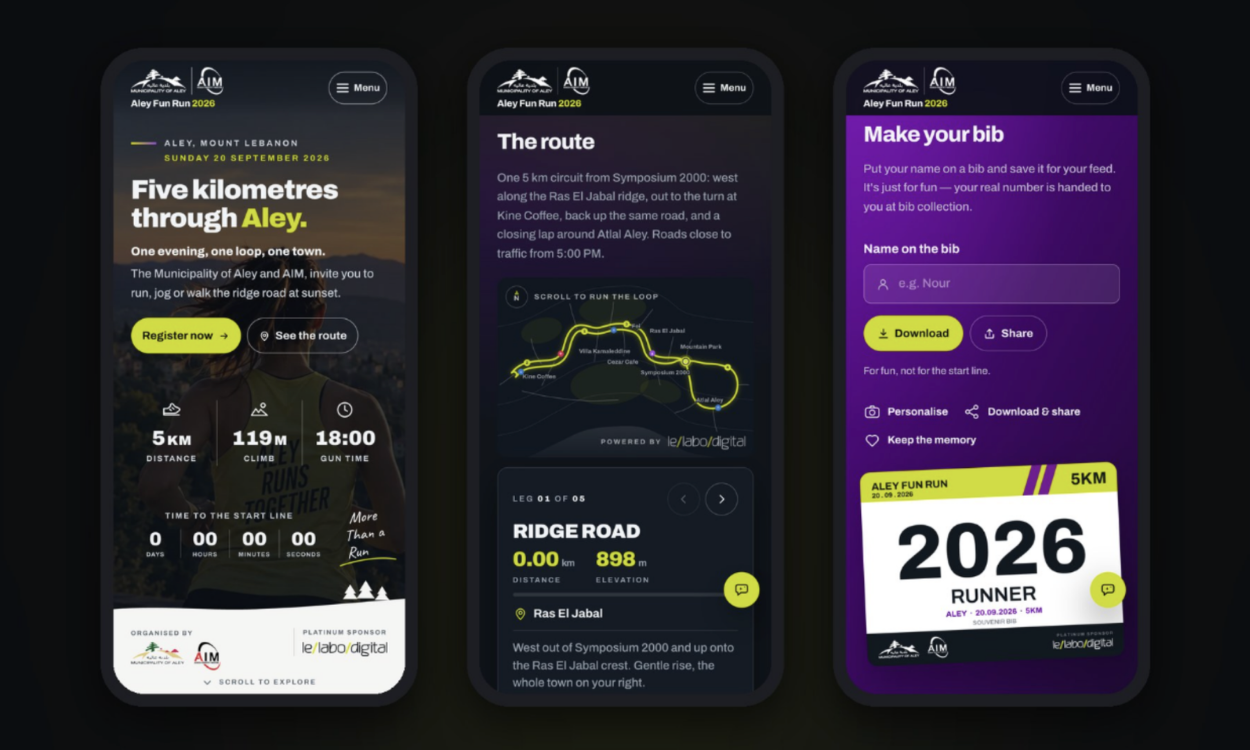
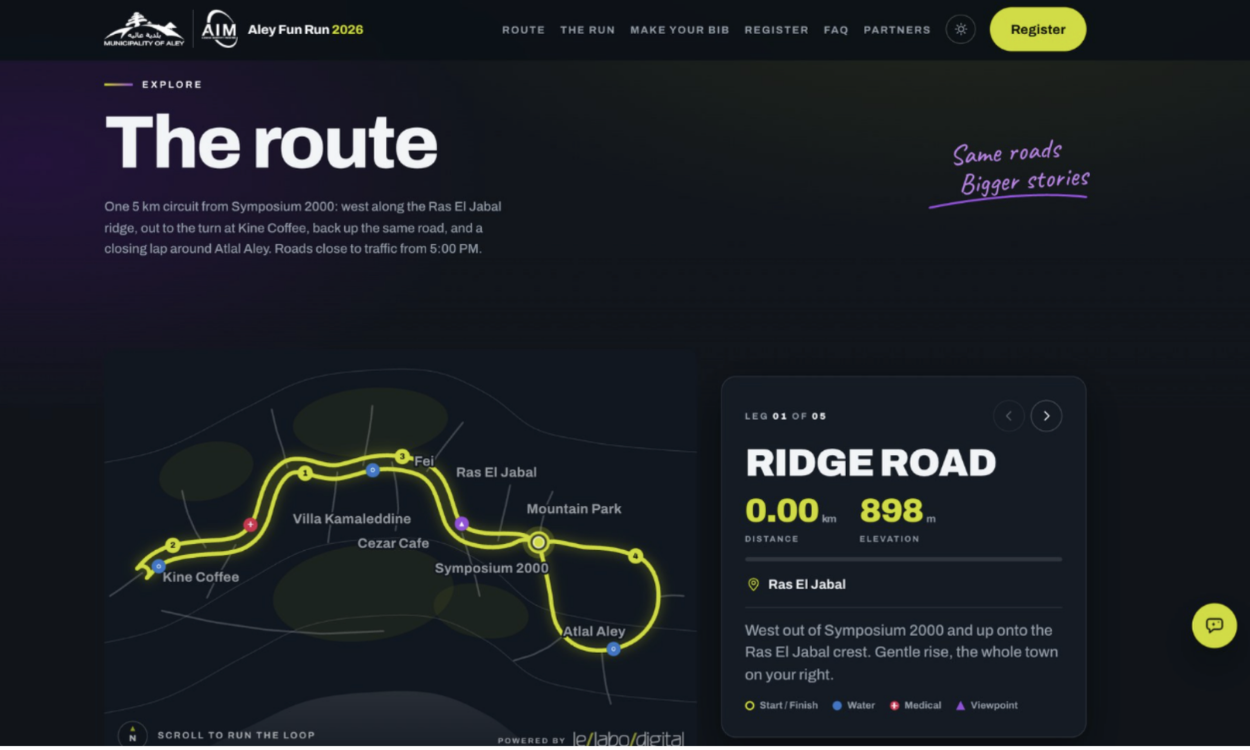
Participants could immediately see the key event details, including the 5 km distance, 119 m climb and 18:00 start time.
The route experience broke the course into five sections, showing the distance and elevation of each leg alongside useful information such as water stations, medical points and viewpoints.
A personalized bib maker also allowed runners to add their name to a souvenir race bib and share it on social media, extending the event experience beyond registration.
An AI Assistant for Every Runner
Community events get the same questions again and again. Where do I park? Where do I collect my bib? Can my kids run? What if it rains? In previous editions, every one of those questions became a phone call to the organizers.
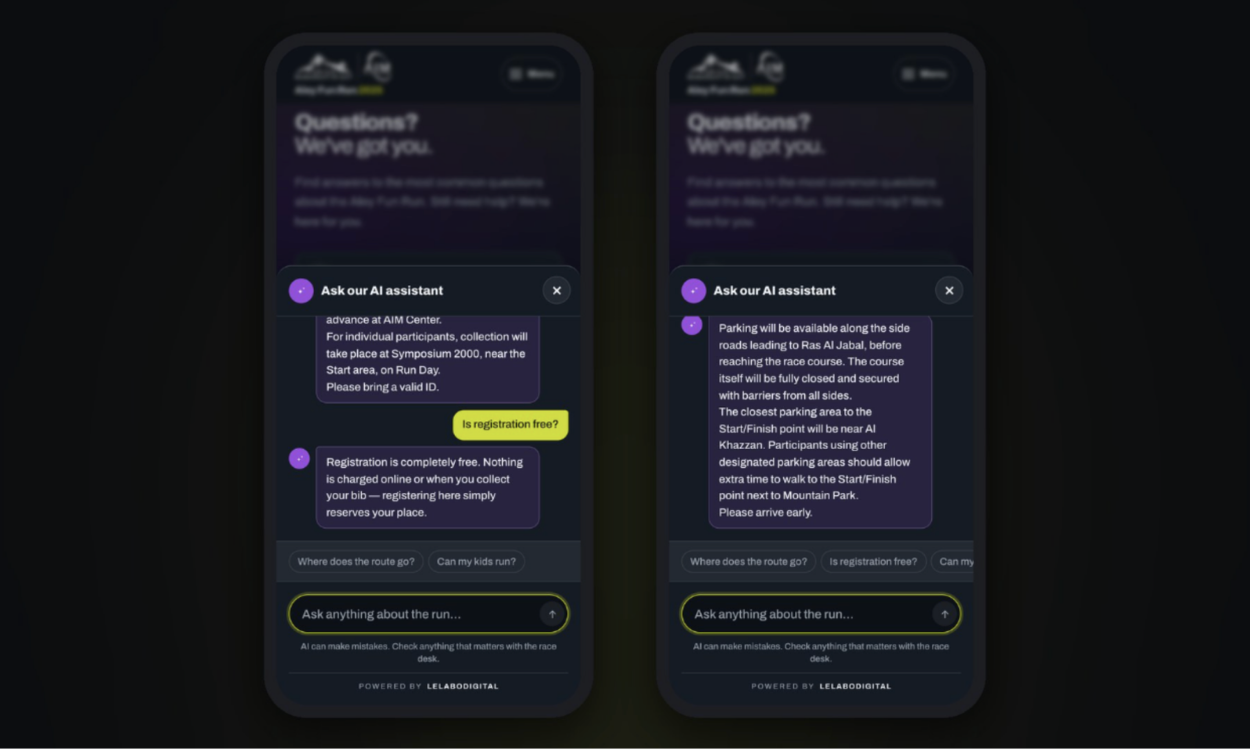
For this event, we built an AI assistant into the website. Runners typed their question in their own words and got an answer in seconds, whether at lunch, at midnight, or the evening before the race. Asked “What if it rains?”, it replied that the run goes ahead, ponchos are handed out if needed, and only lightning or unsafe conditions would postpone it. Asked about parking, it named the side roads to use and the closest parking area to the start.
It covered about forty topics, from the course, water stations and the Red Cross medical point to bib collection, children, wheelchair access, volunteering and even dogs. It also stayed current. When the organizers changed an arrangement, such as moving group bib collection to AIM Center, the assistant gave the new answer from that moment on. Anything outside its topics went straight to the race desk.
For runners, that meant answers whenever they needed them. For the organizers, it meant a week before race day without the same questions ringing their phones.
Human Review Built Into the Process
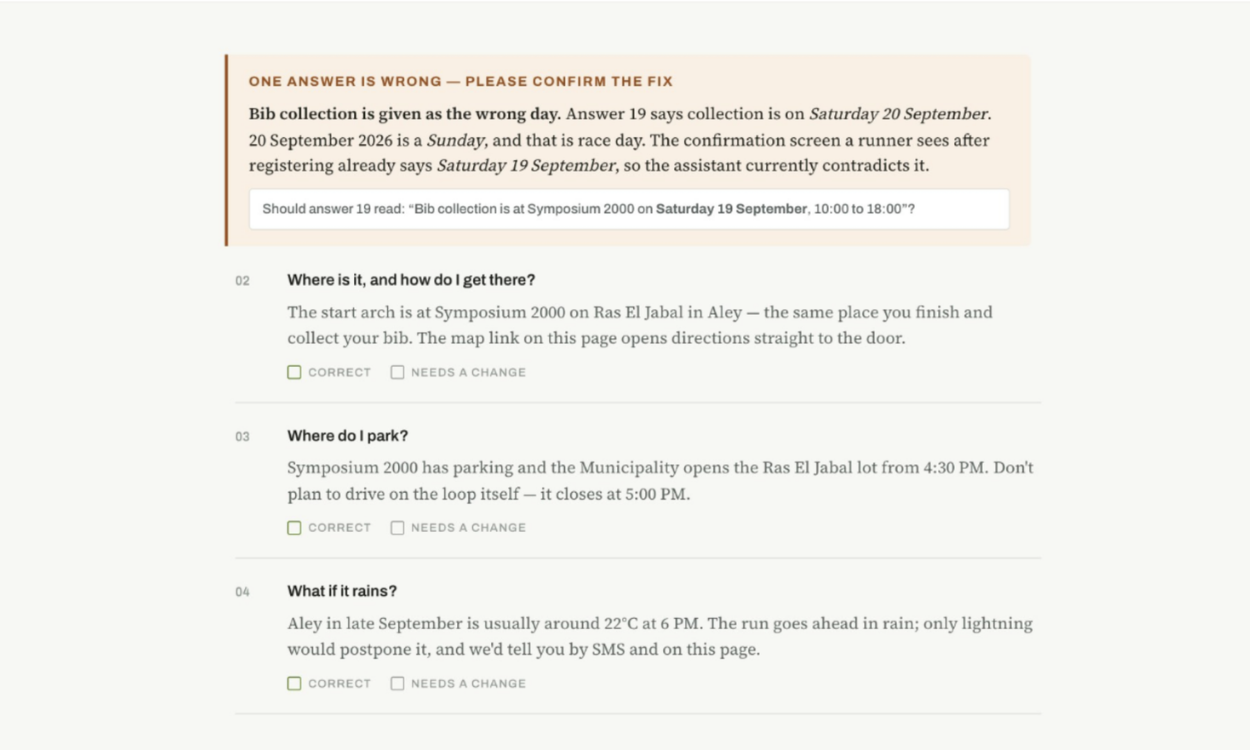
Before launch, the organizers reviewed everything the assistant would tell runners and corrected anything out of date, so a person checked every detail that mattered.
Organizer Dashboard
Behind the participant-facing experience, organizers had their own dashboard.
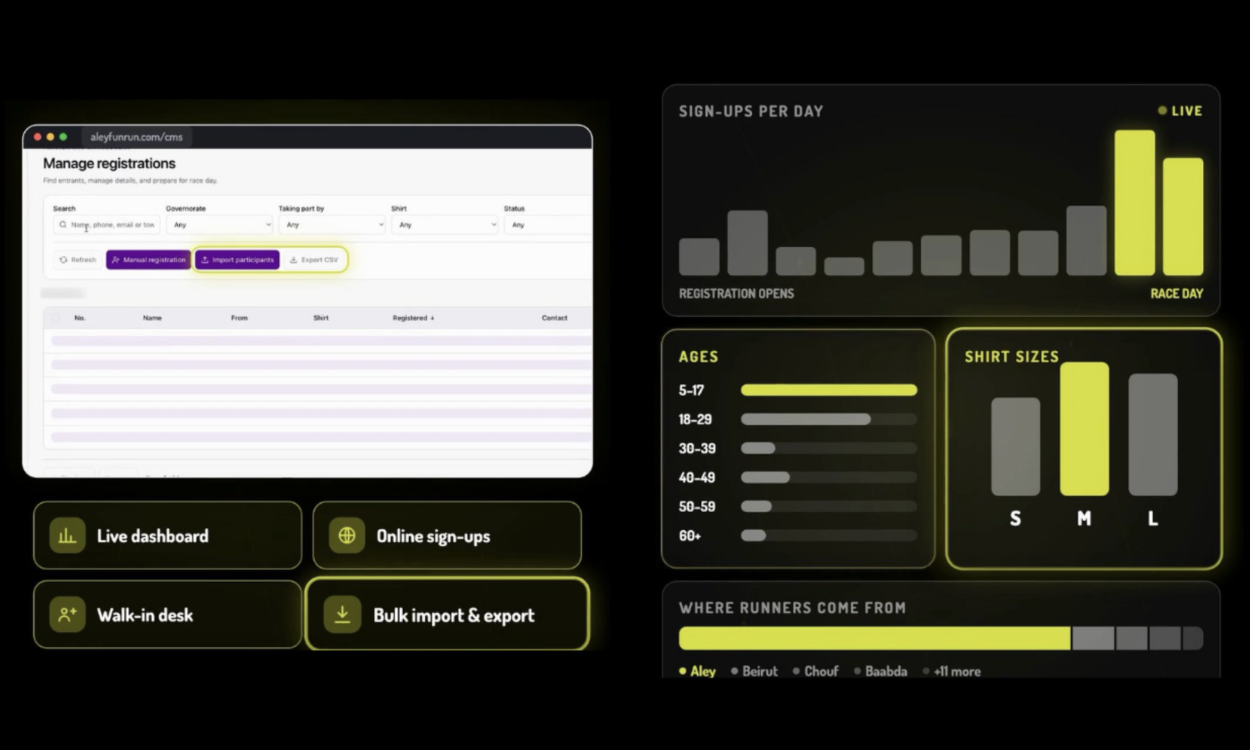
Every confirmed registration appeared automatically, giving the team a centralized view of participation as registration progressed.
The dashboard showed information including:
- registrations by day;
- participant age groups;
- T-shirt sizes;
- geographic distribution; and
- overall registration activity.
Organizers could also control registration directly, including opening or closing registration and adjusting participant limits.
Event information was connected to the same underlying settings used across the platform. When an organizer changed relevant information, the public-facing website could reflect that update in under one minute.
This reduced the need for development intervention whenever an operational detail changed.
Participant Insights Without Exposing Individuals
Registration data also gave organizers a clearer picture of the event’s geographic reach.
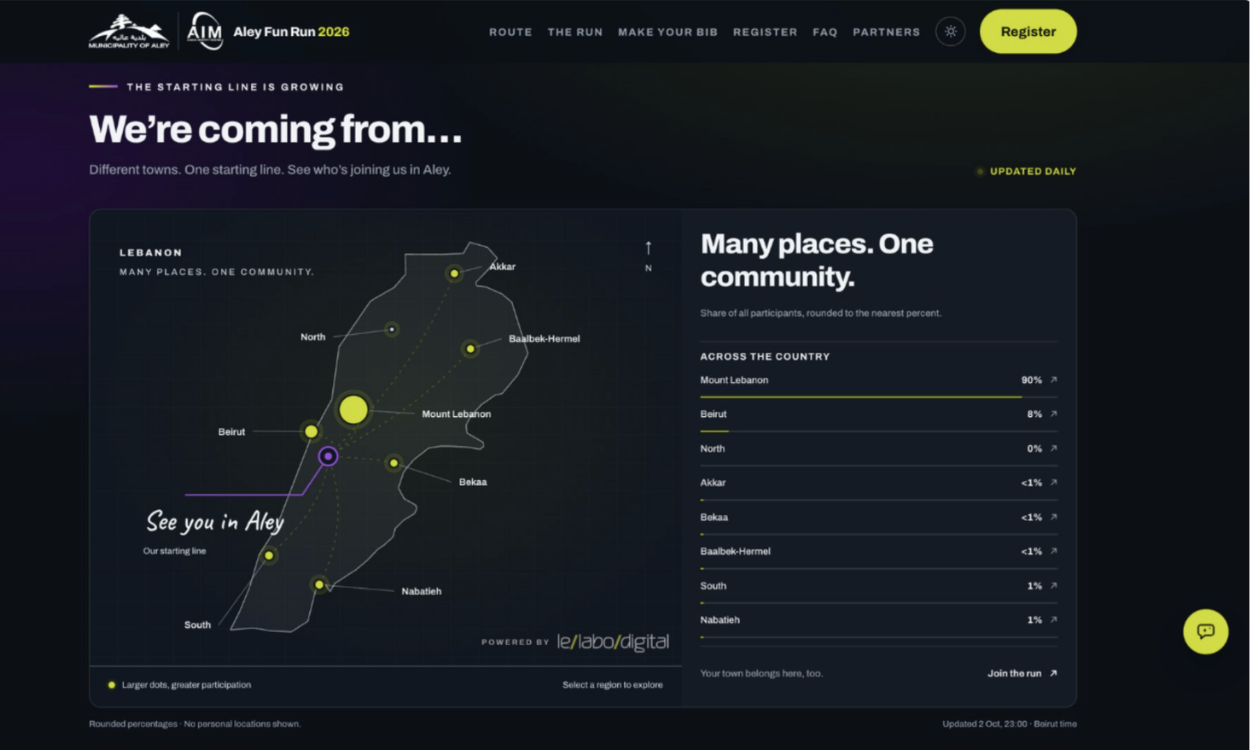
A public map showed where runners were coming from across Lebanon using regional percentages rather than individual participant information.
The results showed that 90% of runners came from Mount Lebanon and 8% from Beirut, with the remainder coming from the South, Nabatieh and other regions.
This allowed the event to communicate its reach without identifying individual runners.
Security the Organizers Could Control
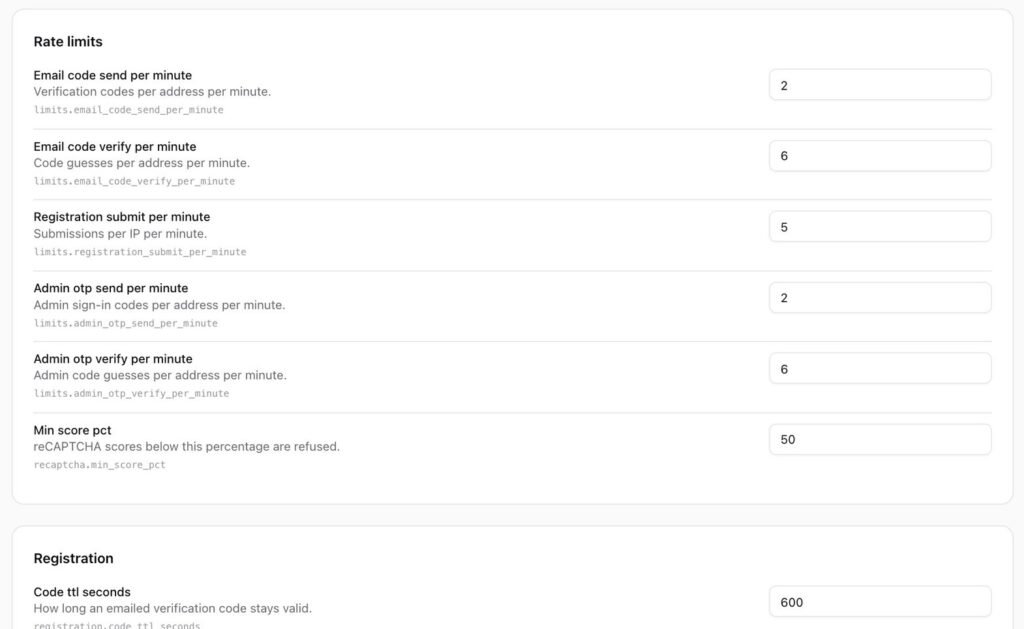
A public registration form gets attention from bots as well as runners, and the platform held personal details for over a thousand people, many of them children. So security was built in from the start, and the controls that matter day to day were put in the organizers’ hands.
Limits they could adjust themselves. Every sensitive action had a rate limit: sending a verification code, entering one, submitting a registration, and signing in to the dashboard. Each limit was a setting, not a value fixed in the code. If a busy registration evening needed more room, or a burst of suspicious traffic needed less, an owner could change it in the dashboard and the next minute’s traffic followed the new rule. The same applied to how long a verification code stayed valid, how soon a new one could be requested, and how strict the automated bot check should be.
Access by role. Each staff member signed in to the dashboard with a one-time code sent by email, and saw only what their role required. Race-desk staff could register runners. Health notes and emergency contacts were limited to a small number of people. Changes to settings were reserved for owners.
A record of every action. The dashboard kept an activity log of who did what and when, including every time someone viewed a health note. Personal data was set to be deleted on a schedule once the event no longer needed it.
None of this needed a developer once the event was running. The organizers could see what was happening and adjust it themselves.
The Results
The platform supported the full ten-day registration period and remained operational as registration activity accelerated immediately before the event.

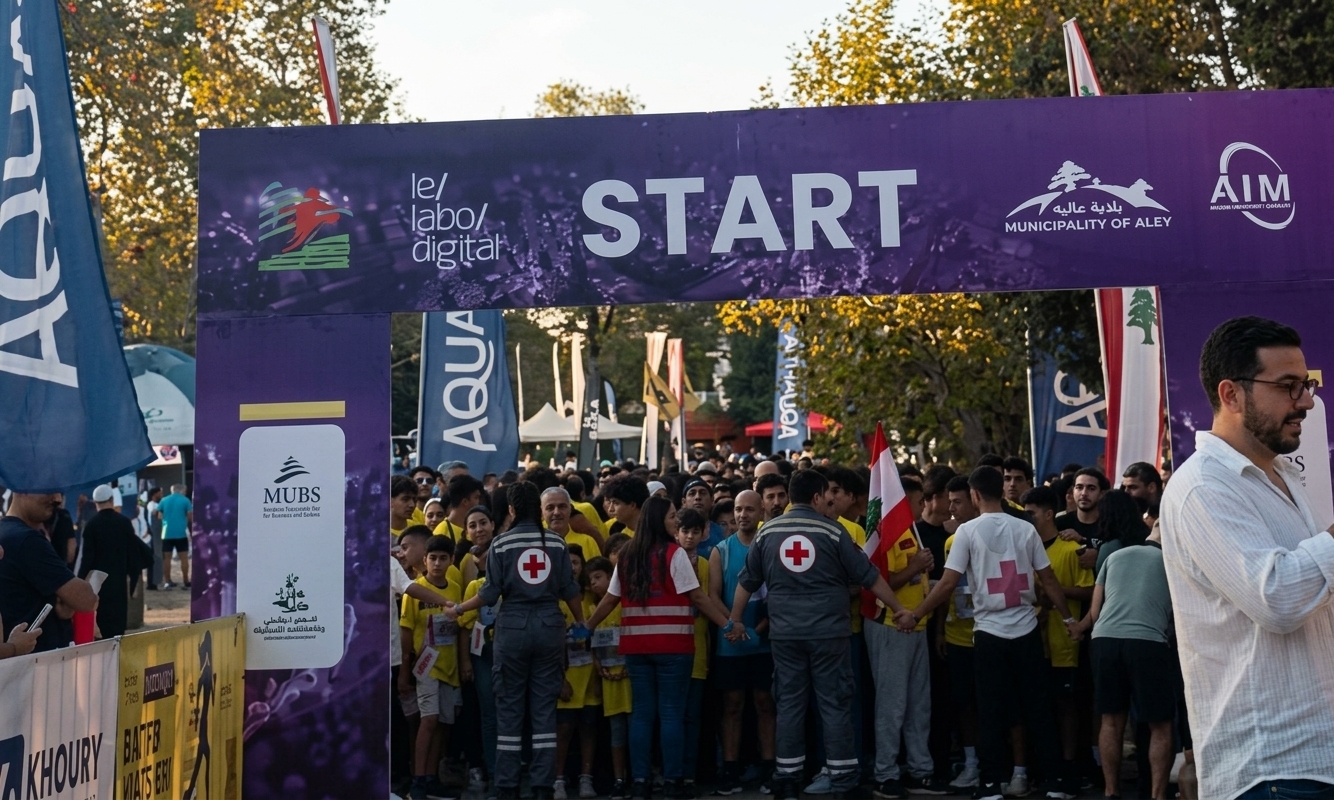
More than a thousand runners ultimately lined up at the start.
The late-registration pattern was particularly important. Approximately four in ten online registrations arrived during the final two days, and the final participant registered only 35 minutes before the race began.
Each registration could still be confirmed and assigned a race number immediately.
Online registrations, race-desk entries and group registrations were managed through the same system, giving organizers one consolidated participant list throughout the process.
Most importantly, registration became something participants and organizers could use without depending on the development team for day-to-day operation.
Built to Run Again
The Aley Fun Run platform was designed as more than a one-off event website.
After the event, the public website can close and participant data can be deleted according to its retention schedule. The underlying technology remains.
The registration system, race numbering, race-desk tools, organizer dashboard, race assistant and route functionality are not tied specifically to the Aley Fun Run.
They provide a reusable foundation that can be adapted for future races and community events without rebuilding the entire system from scratch.
That is ultimately the value of the project: not simply moving a registration form online, but creating digital infrastructure that can support how an event is operated.
Partnership in Action
As Platinum Sponsor and Technology Partner, LeLaboDigital’s contribution went beyond event visibility.
We built the digital infrastructure connecting participants and organizers from the first registration through race day.
View this post on Instagram
Planning a Run or a Community Event?
Organizing a run, race, or community event? LeLaboDigital can help bring your event online, from the public-facing website and registration platform to the behind-the-scenes tools that keep everything running smoothly.
As demonstrated by our work on the Mount Lebanon Dreamers League, we build digital solutions tailored to the needs of organizers and participants alike.
Planning your next event? Talk to our team and let’s bring it to life.